
CPU Intel i9-11900F 2.5 Ghz 1200 Tray CM8070804488246
Vraag gratis offerte aan voor prijsinformatie. Binnen 1 werkdag ontvangt u een prijsopgave van een expert.
Intel Product ID: CM8070804488246
Hulp nodig? Neem contact op met onze experts
Beschikbaar van maandag tot vrijdag, 09:00 - 17:30 uur
Intel Core i9-11900F processor 2,5 GHz 16 MB Smart Cache Tray

Intel Core i9-11900F. Processorfamilie: Intel® Core™ i9, Processor socket: LGA 1200 (Socket H5), Processor lithografie: 14 nm. Geheugen kanaal: Dubbelkanaals, Maximaal intern geheugen ondersteund door processor: 128 GB, Geheugentypen ondersteund door processor: DDR4-SDRAM. Marktsegment: Desktop, Gebruiksvoorwaarden: PC/Client/Tablet, PCI Express configuraties: 1x16+1x4, 2x8+1x4, 1x8+3x4. Intel® Turbo Boost Max Technology 3.0 frequency: 5,1 GHz, Intel® Turbo Boost Technology 2.0 frequency: 5 GHz, Intel® Thermal Velocity Boost Temperature: 70 °C. Verpakkingsgrootte processor: 37.5 x 37.5 mm
Belangrijkste kenmerken:
- Intel® Core™ i9 i9-11900F 2,5 GHz
- 16 MB Smart Cache LGA 1200 (Socket H5)
- Aantal processorkernen: 8 14 nm 64-bit 65 W
- Maximaal intern geheugen ondersteund door processor: 128 GB DDR4-SDRAM
- Tray
Productspecificaties:
| Specificatie | Waarde |
|---|---|
| Processor | |
| Processorfabrikant | Intel |
| Processorgeneratie | Intel® 11de generatie Core™ i9 |
| Processormodel | i9-11900F |
| Basisfrequentie processor | 2,5 GHz |
| Processorfamilie | Intel® Core™ i9 |
| Aantal processorkernen | 8 |
| Processor socket | LGA 1200 (Socket H5) |
| Component voor | PC |
| Processor lithografie | 14 nm |
| Processor aantal threads | 16 |
| Systeembus | 8 GT/s |
| Processor operating modes | 64-bit |
| Maximale turbofrequentie van processor | 5,2 GHz |
| Processor cache | 16 MB |
| Processor cache type | Smart Cache |
| Thermal Design Power (TDP) | 65 W |
| Type verpakking | Tray |
| Inclusief koeler | Nee |
| Geheugenbandbreedte ondersteund door de processor ( max) | 50 GB/s |
| ARK ID processor | 212254 |
| Geheugen | |
| Maximaal intern geheugen ondersteund door processor | 128 GB |
| Geheugentypen ondersteund door processor | DDR4-SDRAM |
| Klokgeheugen-snelheden ondersteund door processor | 3200 MHz |
| Geheugen kanaal | Dubbelkanaals |
| ECC | Nee |
| Geheugen bandbreedte (max) | 50 GB/s |
| Grafisch | |
| Ingebouwde grafische adapter | Nee |
| Aparte grafische adapter | Nee |
| On-board graphics adapter model | Niet beschikbaar |
| Discreet grafische adapter model | Niet beschikbaar |
| Kenmerken | |
| Execute Disable Bit | Ja |
| Idle States | Ja |
| Thermal Monitoring Technologies | Ja |
| Marktsegment | Desktop |
| Gebruiksvoorwaarden | PC/Client/Tablet |
| Maximaal aantal PCI Express-lijnen | 20 |
| PCI Express slots versie | 4.0 |
| PCI Express configuraties | 1x16+1x4, 2x8+1x4, 1x8+3x4 |
| Ondersteunde instructie sets | SSE4.1, SSE4.2, AVX 2.0, AVX-512 |
| Schaalbaarheid | 1S |
| CPU configuratie (max) | 1 |
| Ingebouwde opties beschikbaar | Nee |
| Thermal solution specificatie | PCG 2019C |
| Export Control Classification Number (ECCN) | 5A992CN3 |
| Commodity Classification Automated Tracking System (CCATS) | G167599 |
| Processor speciale functies | |
| Intel® Hyper Threading Technology (Intel® HT Technology) | Ja |
| Intel® Identity Protection Technology (Intel® IPT) | Ja |
| Intel® Turbo Boost Technology | 2.0 |
| Intel® AES New Instructions (Intel® AES-NI) | Ja |
| Enhanced Intel SpeedStep Technology | Ja |
| Intel® Trusted Execution Technology | Nee |
| Intel® Thermal Velocity Boost | Ja |
| Intel® Turbo Boost Max Technology 3.0 frequency | 5,1 GHz |
| Intel® Turbo Boost Technology 2.0 frequency | 5 GHz |
| Intel® Gaussian & Neural Accelerator (Intel® GNA) 2.0 | Ja |
| Intel® Thermal Velocity Boost Temperature | 70 °C |
| Intel® Thermal Velocity Boost Frequency | 5,2 GHz |
| Intel® Enhanced Halt State | Ja |
| Intel® VT-x with Extended Page Tables (EPT) | Ja |
| Intel® Secure Key | Ja |
| Intel® Stable Image Platform Program (SIPP) | Nee |
| Intel® OS Guard | Ja |
| Intel® Software Guard Extensions (Intel® SGX) | Nee |
| Intel® 64 | Ja |
| Intel® Virtualization Technology (VT-x) | Ja |
| Intel® Virtualization Technology for Directed I/O (VT-d) | Ja |
| Intel® Turbo Boost Max Technology 3.0 | Ja |
| Intel® Optane™ Memory Ready | Ja |
| Intel® Boot Guard | Ja |
| Intel® Deep Learning Boost (Intel® DL Boost) on CPU | Ja |
| Intel® vPro™ Platform Eligibility | Nee |
| Intel® Stabiel IT-platformprogramma (SIPP) | Nee |
| Eisen aan de omgeving | |
| Tjunction | 100 °C |
| Technische details | |
| Doelgroep | Gaming, Content Creation |
| Lanceringsdatum | Q1'21 |
| Status | Launched |
| Ondersteunde geheugen types | DDR4-SDRAM |
| Bussnelheid | 8 GT/s |
| Logistieke gegevens | |
| Code geharmoniseerd systeem (HS) | 8542310001 |
| Gewicht en omvang | |
| Verpakkingsgrootte processor | 37.5 x 37.5 mm |
| Overige specificaties | |
| Maximum intern geheugen | 128 GB |
CPU Computing
Powering High-Performance Computing (HPC) with Advanced CPU Technology
The CPU, often described as the computer's brain, processes instructions, stores data, and delivers output. Its role in overall system performance, though not as dominant as before, remains crucial for the device's responsiveness and speed. Essentially, without a CPU, a computer cannot function.
A CPU, made up of logic gates, executes low-level instructions essential for basic operations and directing commands within the system. It's the core of a computer's integrated circuitry, managing logic, arithmetic, and input/output operations.
Modern CPUs are multi-core, incorporating multiple processing units within a single chip to lower power use, boost performance, and allow for the simultaneous processing of tasks, enhancing parallel processing capabilities.
Applications of CPU Computing
CPU computing plays a critical role in various industries and research fields. Some of the key applications include:
- Machine Learning & Deep Learning: Accelerate complex algorithms for faster processing and improved learning capabilities.
- Data Analysis: Handle large datasets with ease, offering speed and accuracy in processing and visualization.
- Scientific Simulations: Enhance simulations in fields like astrophysics and bioinformatics, allowing for more detailed and accurate models.
- Financial Modeling: Optimize risk management and financial modeling for quicker and more precise decision-making.
Intel or AMD
Which CPU Should You Choose
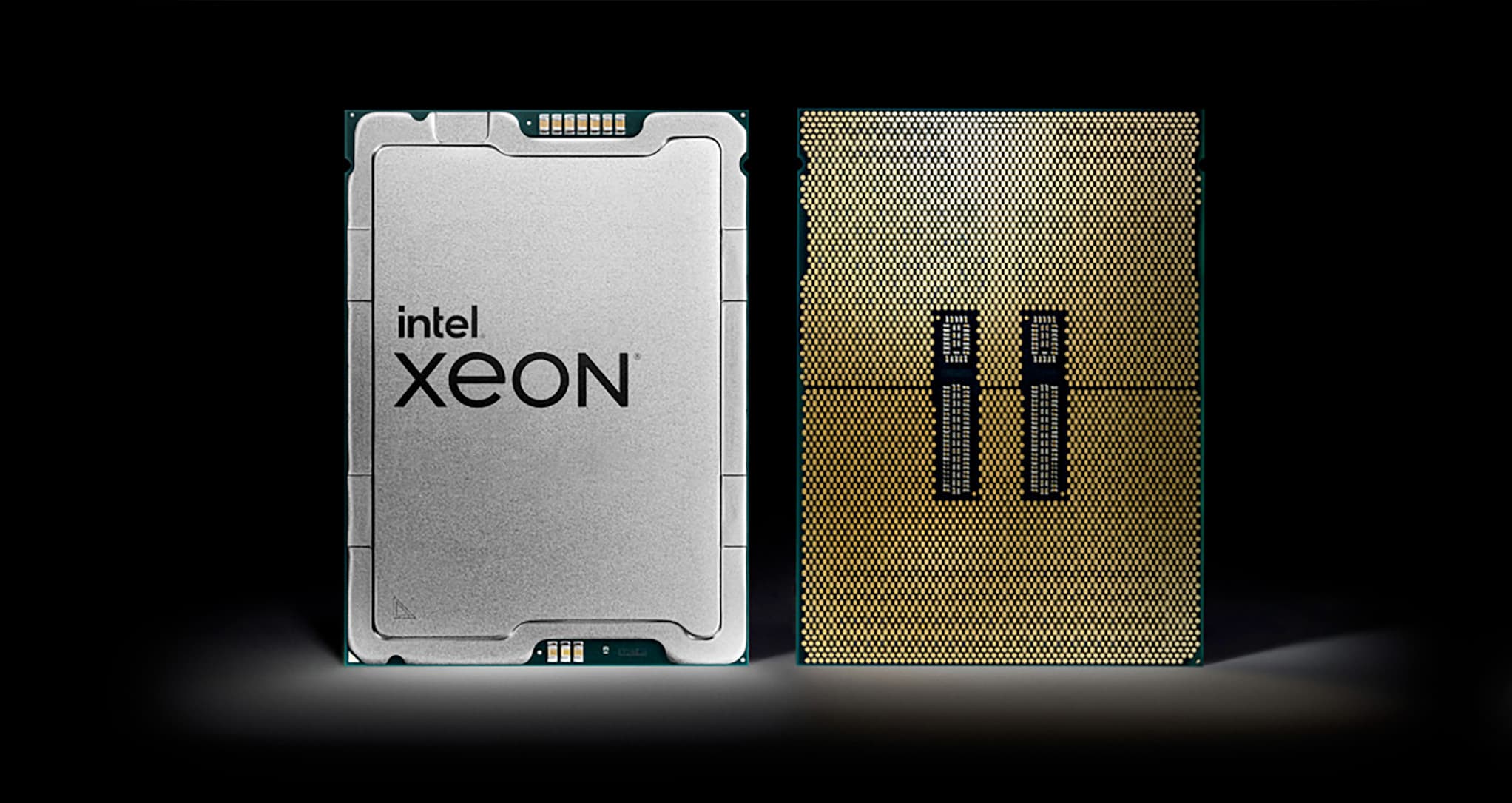
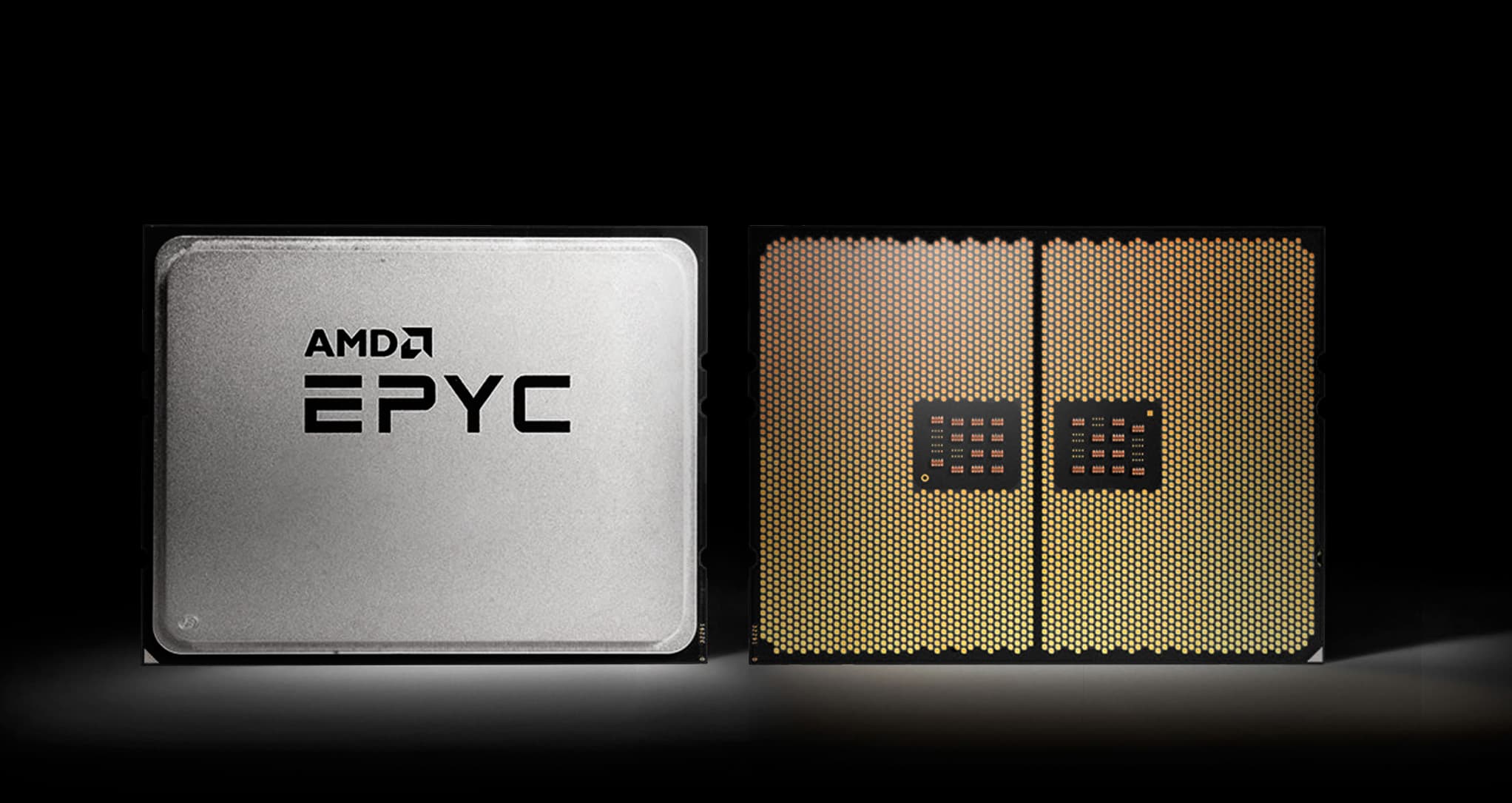
Both Intel and AMD offer high-performance CPUs suitable for enterprise applications. Intel's CPUs have traditionally been favored for their single-threaded performance and efficiency, making them ideal for certain workloads such as virtualization and database management. On the other hand, AMD's CPUs often offer more cores and threads for parallel processing, making them well-suited for tasks like data analytics and content creation.
For further consultation, reach out to one of our professionals to make an informed decision.
Benefits of Modern CPUs in Computing
- Flexibility: Versatile, capable of handling a wide range of tasks and multitasking efficiently.
- Speed: For operations involving RAM data processing, I/O operations, and managing the operating system, CPUs often outperform GPUs.
- Precision: Higher precision in mid-range mathematical operations, crucial for various applications.
- Cache Memory: With substantial local cache, CPUs efficiently manage extensive sequences of instructions.
- Compatibility: Unlike GPUs, which may need specific hardware support, CPUs fit universally across motherboards and system architectures, ensuring broad hardware compatibility.
Maximizing AI Efficiency: Navigating the Unique Strengths of CPUs and GPUs
CPUs and GPUs each bring unique strengths to AI projects, tailored to different types of tasks. The CPU, serving as the computer's central command, manages core speeds and system operations. It excels at executing complex mathematical calculations sequentially, but its performance may dip under heavy multitasking.
For AI, CPUs fit specific niches, excelling in tasks that require sequential processing or lack parallelism. Suitable applications include:
- High-memory recommender systems
- Large-scale data processing, like 3D data analysis
- Real-time inference and ML algorithms that resist parallelization
- Sequentially dependent recurrent neural networks
Collaboration CPU & GPU
High Performance Computing (HPC) utilizes technologies for large-scale, parallel computing. Modern HPC systems increasingly incorporate GPUs alongside traditional CPUs, often combining them within the same server for enhanced performance.
These HPC systems employ a dual root PCIe bus design to efficiently manage memory across numerous processors. This setup features two main processors each with its own memory zone, dividing the PCIe slots (often used for GPUs) between them for balanced access.
Key to this architecture are three types of fast data connections:
- Inter-GPU Connection: Uses NVlink for rapid GPU-to-GPU communication, allowing multiple GPUs to function as a single, powerful unit.
- Inter-Root Connection: Facilitates communication between the two processors via high-speed links like Intel's Ultra Path Interconnect (UPI).
- Network Connection: Employs fast network interfaces, typically Infiniband, for external communications.
This dual-root PCIe configuration optimizes both CPU and GPU memory usage, catering to applications that demand both parallel and sequential processing capabilities.
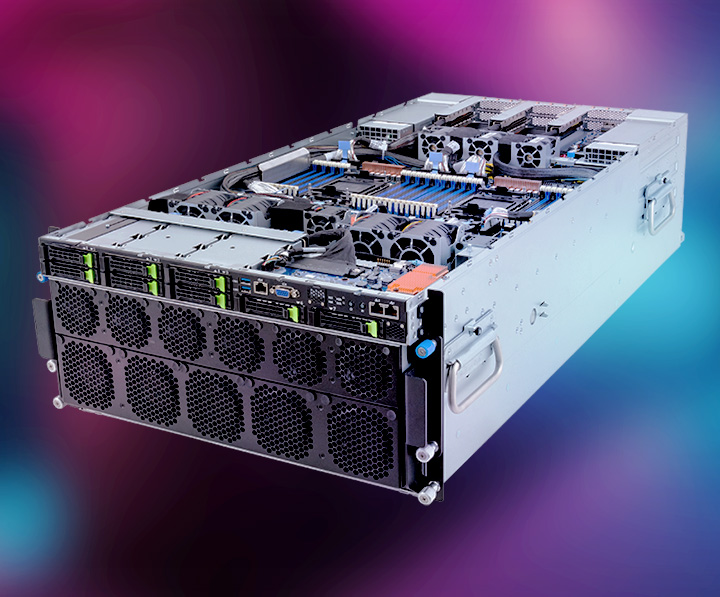
GIGABYTE
HPC/AI Server
5th/4th Gen Intel® Xeon® Scalable - 5U DP HGX™ H100 8-GPU
NVIDIA HGX™ H100 with 8 x SXM5 GPUs
900GB/s GPU-to-GPU bandwidth with NVLink® and NVSwitch™
5th/4th Gen Intel® Xeon® Scalable Processors
Intel® Xeon® CPU Max Series
The Indispensable Role of CPUs in AI Development
While the majority of AI applications today leverage the parallel processing prowess of GPUs for efficiency, CPUs remain valuable for certain sequential or algorithm-intensive AI tasks. This makes CPUs an essential tool for data scientists who prioritize specific computational approaches in AI development.
For machine learning and AI applications, the Intel® Xeon® and AMD Epic™ CPUs are recommended for their reliability, ability to support the necessary PCI-Express lanes for multiple GPUs, and superior memory performance in the CPU domain, making them ideal choices for demanding computational tasks.

• Afbeeldingen van producten op de website kunnen verschillen van het werkelijke product.
• De gepubliceerde prijzen in de winkel kunnen worden gewijzigd en kunnen variëren op basis van marktomstandigheden en beschikbaarheid van de voorraad.

Schrijf in voor onze Nieuwsbrief
Hebt u vragen of hulp nodig? Wij helpen u graag.
Leverancier van betrouwbare serveroplossingen en opslag. Systeemintegratie van servers en opslag van fabrikanten zoals Supermicro, ASUS, NetApp, HPE, Dell, GIGABYTE, ASRock, Western Digital, Seagate, Micron, Chenbro, Toshiba. Wij leveren wereldwijd: Brussel, Parijs, Madrid, Rome, Amerika, Dubai en meer.
